Evidence review: AI Dermatologist (Skin Scanner)
Product: AI Dermatologist: Skin Scanner
A dated review of historical AI Dermatologist screenshots, the product's changed 2026 store description, and the MDR questions that the public evidence can and cannot answer.
Questions for regulatory assessment
- Did the product's intended purpose at the time of capture bring the software within MDR Article 2(1)?
- If it was medical device software, what classification followed from Annex VIII Rule 11?
- Was notified body involvement applicable when the captured CE mark was displayed without a four-digit number?
- What label, instructions, UDI, registration and conformity records existed outside the four captured screens?
Status and scope: This is a public evidence review, not a finding by a regulator and not proof that a complaint was filed. MD Watchdog has not found a public filing receipt or authority decision for this case.
What the preserved evidence shows
MD Watchdog preserved four app screenshots when this case was first published in November 2025. The screenshots do not contain a capture date, a legal-manufacturer statement, a declaration of conformity, an Instructions for Use document, or a regulator reference number. They support only the observations listed below.
| Image | Direct observation |
|---|---|
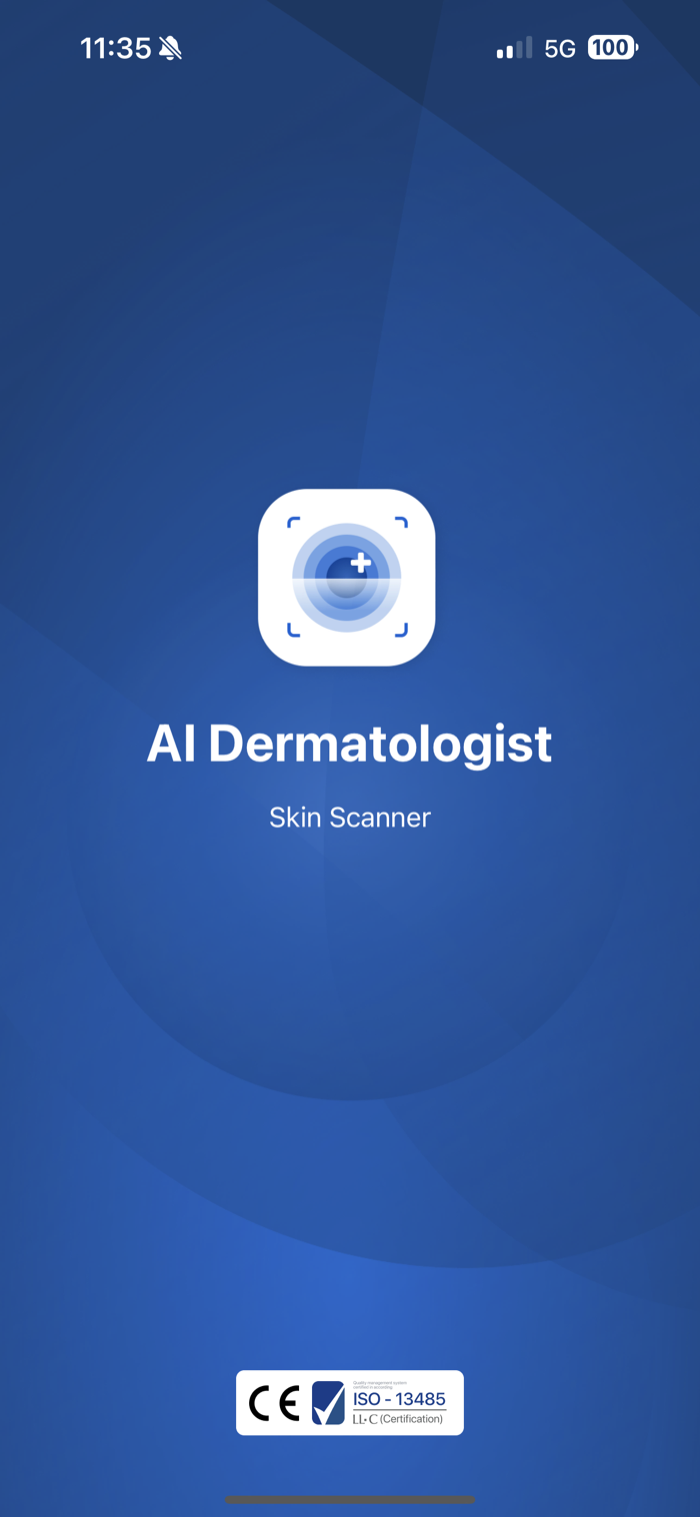
| 1 | The launch screen calls the product “AI Dermatologist” and “Skin Scanner”. It displays a CE symbol beside an ISO 13485 quality-management certification logo naming LL-C (Certification). No four-digit notified-body number is visible. |
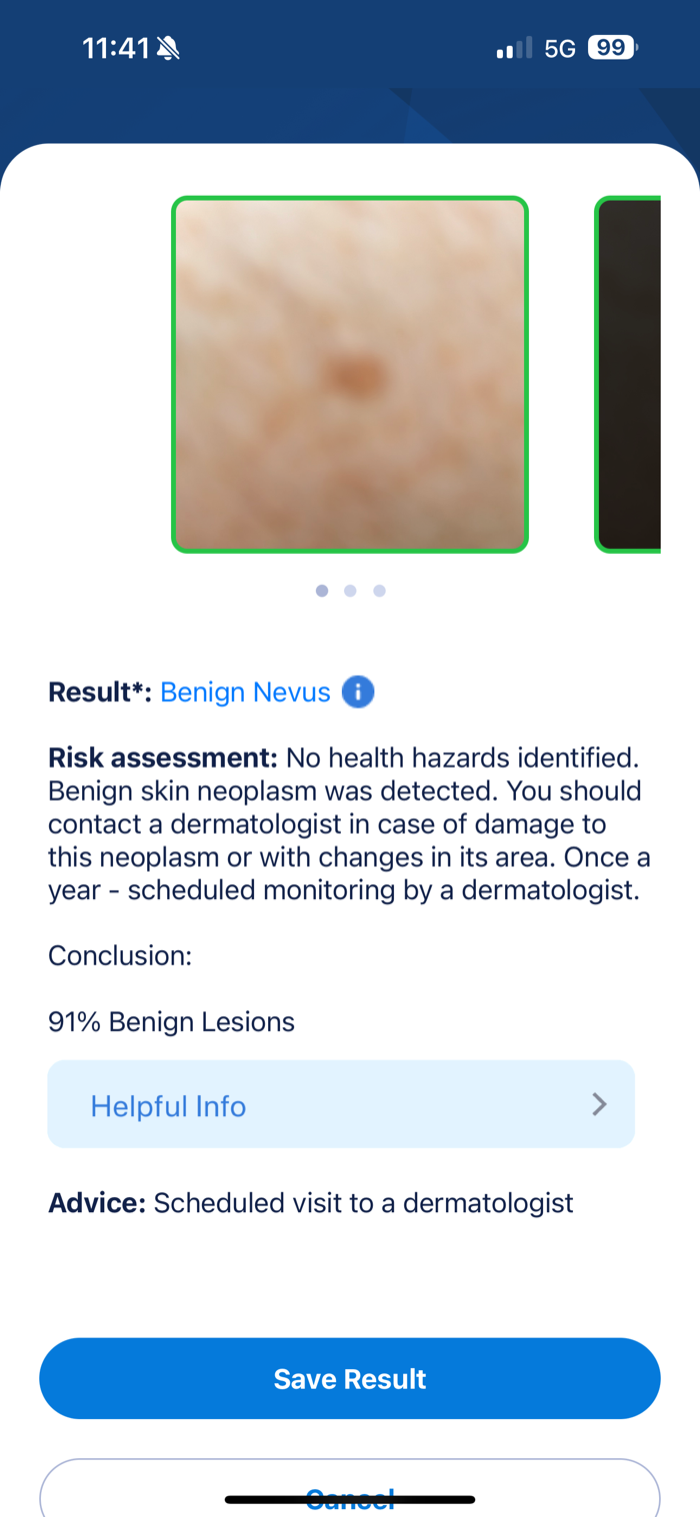
| 2 | The app returns “Benign Nevus”, a “91% Benign Lesions” conclusion, a risk-assessment paragraph, and advice to schedule a dermatologist visit. |
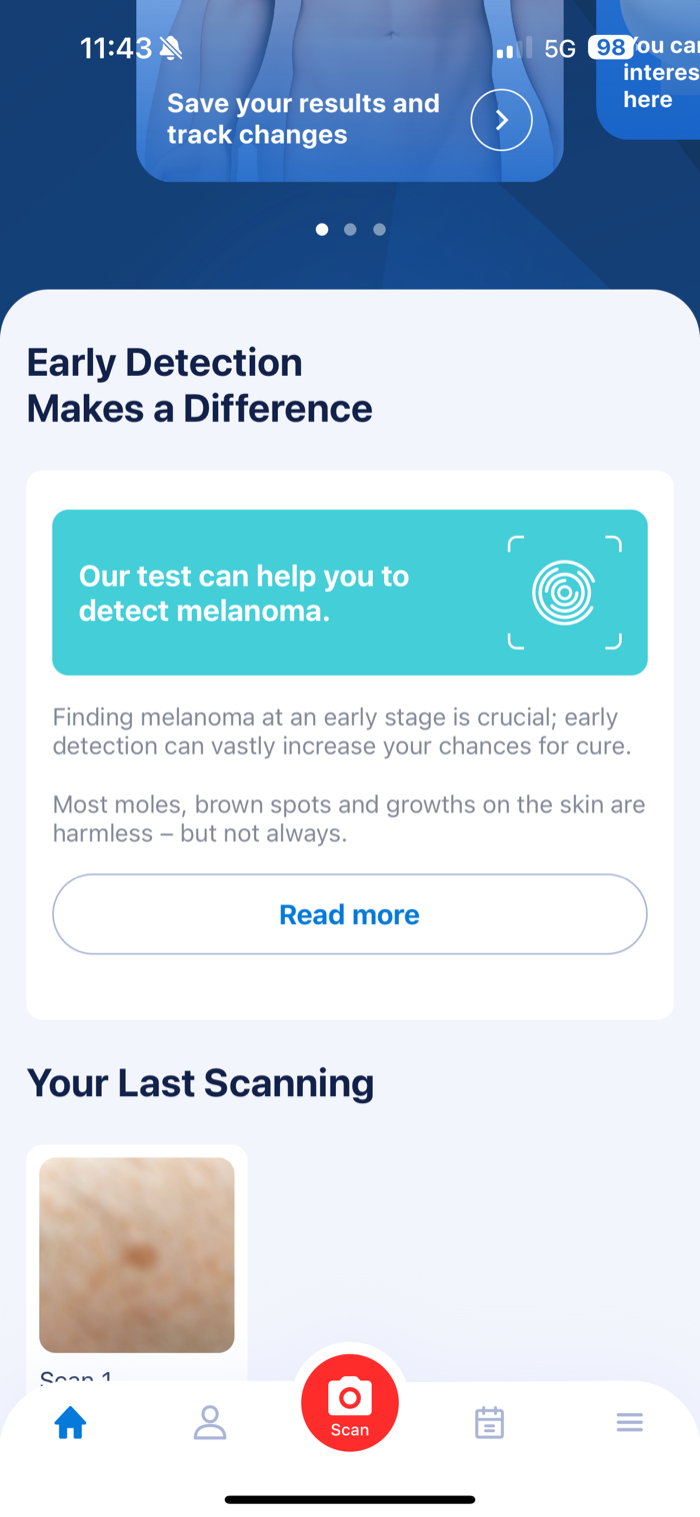
| 3 | The app states, “Our test can help you to detect melanoma.” |
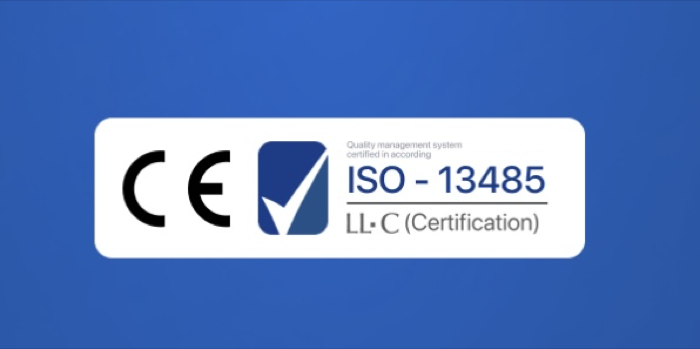
| 4 | A closer crop shows the same CE and ISO 13485 certification graphic. |
These images show how the app presented itself in the captured version. They do not establish what technical documentation, conformity assessment, registration, labelling, or instructions may have existed elsewhere.
The current public listing is different
The current Google Play listing, updated on 24 April 2026, names ACINA, UAB as the developer. It now describes the product as a skin-awareness and self-monitoring tool, says it is not a diagnostic tool or medical device, and says it cannot detect cancer or determine risk.
That current wording conflicts with the earlier melanoma-detection message and lesion result preserved above. A changed listing does not determine what the intended purpose was in the earlier version. It does mean a current assessment must not repeat the old claims as though they remain the present store description.
The previous version of this page named IAC Search and Media Europe, Ltd. as the operator. The four screenshots do not support that identification, and no current public source reviewed for this update establishes that entity as the manufacturer of the captured version. The page now identifies only the developer named by the current Google Play listing.
Regulatory analysis
1. Possible qualification as medical device software
Article 2(1) of Regulation (EU) 2017/745 includes software intended by its manufacturer for medical purposes such as diagnosis, prevention, monitoring, prediction, prognosis, treatment, or alleviation of disease.
The captured melanoma-detection statement and lesion-specific result are relevant evidence of intended purpose. They justify asking whether that version was medical device software. They do not, on their own, settle the legal manufacturer’s complete intended-purpose statement or the product’s final qualification.
The 2026 store disclaimer is also relevant to a current assessment. Regulatory qualification considers the full product presentation, functionality, instructions, and claims. A reviewer would need the version-specific store materials, onboarding, terms, output flow, and technical documentation rather than one statement in isolation.
2. Classification cannot be concluded from these screenshots
Annex VIII Rule 11 classifies software according to the decisions its information supports and the possible impact of those decisions. The European Commission’s MDCG 2019-11 rev.1 guidance explains how intended purpose, significance of information, and the healthcare situation interact.
The earlier version of this page called the app Class III. That conclusion was too categorical. A defensible classification needs the exact intended purpose, user population, role in the clinical decision, foreseeable decisions, and severity of the possible harm. The public screenshots raise a Rule 11 question but do not establish all of those facts. This page therefore displays no risk-class badge.
3. The CE image raises a verification question
Article 20 MDR requires a notified body’s identification number to follow the CE mark where that body’s involvement is applicable. The Commission explains that notified bodies are designated for defined legislation and scope and are listed in NANDO.
The captured graphic shows no four-digit number. It places a CE symbol beside an ISO 13485 certification logo. ISO 13485 quality-management certification and an MDR conformity assessment are not interchangeable. Even so, the screenshot alone does not prove that notified-body involvement was applicable, that no separate compliant marking existed, or that LL-C was represented as the MDR notified body. Those points require the device classification, certificate, declaration of conformity, and version-specific label.
A manufacturer may use any appropriately designated EU notified body within scope. The notified body does not have to be located in the manufacturer’s Member State.
4. No negative registration claim is made
The earlier page asserted that neither the device nor manufacturer appeared in EUDAMED. That claim is removed. The first four EUDAMED modules, including actor and UDI/device registration, became mandatory on 28 May 2026, with transition details that depend on when devices and certificates were placed or issued. The Commission publishes the current EUDAMED timetable and transition material.
A reliable negative finding requires a dated search using the correct legal manufacturer, device identifiers, applicable transition, and records of the search. Those elements are not available in this public case file.
5. Missing documents cannot be inferred from four screens
The screenshots do not show a product label, Instructions for Use, UDI, warnings, declaration of conformity, or certificate. That absence from the screenshots is not proof that the documents did not exist elsewhere. A regulator or qualified reviewer would need to inspect the captured app version, store listing, website, supplied electronic information, and records requested from the responsible economic operator.
What changed in this review
This update removes the unverified filing date, the claim that HPRA received the case, the categorical Class III classification, the old operator attribution, the negative EUDAMED assertion, and the statement that the screenshots prove regulatory violations. It preserves the original images and stable URL because the version change itself is useful public evidence.
If you have direct evidence or experienced harm
Do not rely on this page for medical advice. Seek a qualified healthcare professional if a product result affects a health decision.
For an incident or product-safety problem, use the reporting route published by the competent authority for your country. The European Commission maintains national medical-device authority contacts. If the issue occurred in Ireland, the HPRA explains its public reporting routes. Authority forms may request contact details and may contact the manufacturer or reporter.
If you can publicly substantiate the legal manufacturer, version, certificate, declaration, label, Instructions for Use, UDI, filing receipt, or authority outcome, contact MD Watchdog so this evidence review can be corrected.
Supporting Evidence